

Pool Acid Wash Service
Restore Compatible Pool Surfaces When Less Aggressive Treatment Is Not Enough
An acid wash is not simply a stronger pool cleaning.
It is a controlled surface-treatment process that removes a very thin outer layer from a compatible cementitious pool finish. This can improve certain widespread stains, discoloration and mineral deposits that have not responded to normal cleaning or less aggressive treatment.
Because acid washing permanently removes surface material, Seader Services evaluates the finish and likely cause of the discoloration before recommending the procedure.
Not every stained pool needs an acid wash and some surfaces should not be acid washed at all.
When an Acid Wash May Be Appropriate
Acid washing may be considered when:
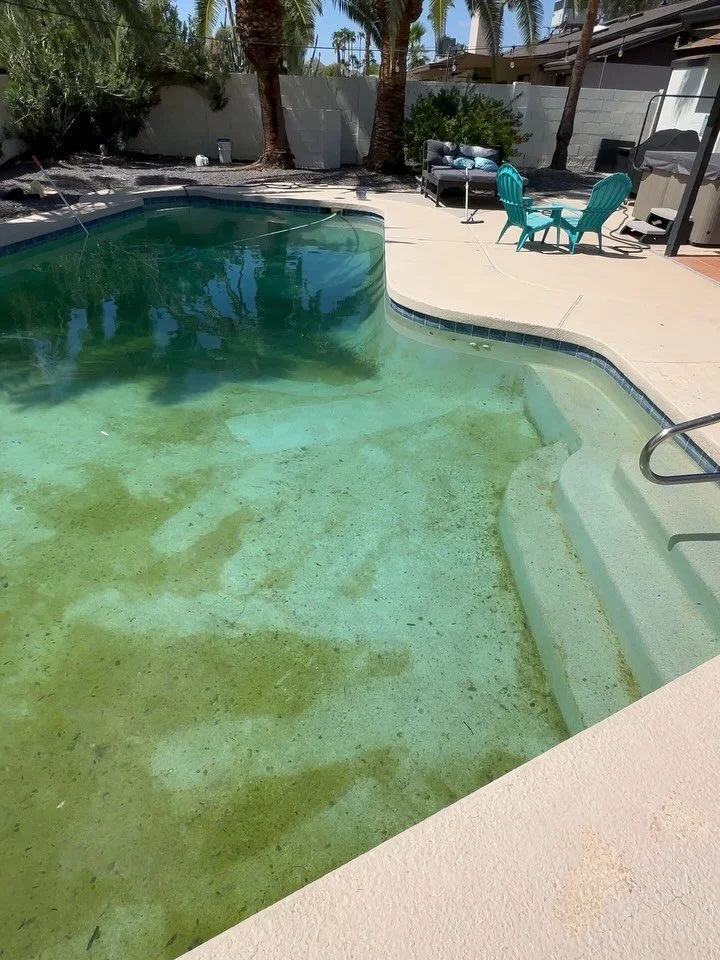
Widespread staining remains after normal brushing and treatment
Organic discoloration remains after a severe algae event
Compatible plaster or aggregate surfaces have persistent mineral deposits
The finish has become noticeably dull or discolored
Previous chemical treatments have not produced meaningful improvement
A pool needs cosmetic restoration before listing photography or a home sale
The pool is already being drained for another approved purpose
A small test area indicates that controlled acid treatment may improve the surface
The appearance, cause and depth of the staining must be evaluated before the expected result can be estimated.

@seaderservices

What an Acid Wash Cannot Fix
Acid washing does not repair or reverse:
Cracked plaster
Delamination or hollow areas
Structural cracks
Worn-through or extremely thin finishes
Existing etching or surface erosion
Calcium nodules caused by underlying finish defects
Severe surface roughness
Missing aggregate
Tile-line scale
Failed paint or coating
Equipment or circulation problems
Every form of metal staining
Natural variation or permanent mottling within the finish
An acid wash is not resurfacing. It removes material; it does not add new material or rebuild a deteriorated finish.
If the surface is structurally worn or damaged, resurfacing may be more appropriate than additional chemical treatment.
What the Service May Include
An acid-wash project may include:
Pre-service surface evaluation
Existing-water testing
Drain and refill planning
Identifying an approved discharge route
Shutting down circulation equipment and automatic fill systems
Draining the pool with a submersible pump
Removing ordinary loose debris
Preparing and protecting the surrounding work area
Controlled acid treatment of approved surfaces
Neutralizing the treatment
Thorough rinsing and cleanup
Managing the resulting wash water appropriately
Beginning the refill promptly
Restarting circulation at the proper water level
Initial testing and chemical balancing
Documenting visible results and remaining concerns
The exact process depends on the pool finish, size, layout and severity of the staining.
Tile cleaning, calcium blasting, sanding, crack repair, plaster repair, chlorine washing, heavy debris removal and equipment repairs are separate unless specifically included in the proposal.
Our Diagnosis-First Approach
Here’s What To Expect:
1. Identify the Pool Finish
We determine whether the pool has plaster, quartz, exposed aggregate or another interior surface.
2. Evaluate Surface Condition
We inspect for cracks, thin areas, delamination, excessive roughness, previous etching and other conditions that may make acid washing inappropriate.
3. Evaluate the Discoloration
We consider whether the visible condition appears to be organic staining, mineral scale, metal staining, aging, mottling or physical deterioration.
4. Review Less Aggressive Options
Depending on the condition, an alternative may include:
Targeted stain treatment
Water-chemistry correction
Back-to-Blue recovery
Chlorine washing
Localized surface treatment
Tile cleaning
Partial water replacement
Professional resurfacing
5. Set Realistic Expectations
When appropriate, a small test area may be used to evaluate how the finish responds before the complete service is approved.
6. Confirm the Drain, Treatment and Refill Plan
We review access, weather, surface exposure, discharge routing, water availability and the anticipated refill timeline.
We do not recommend acid washing simply because a pool looks old or has not been drained recently.
Compatible Pool Surfaces
Acid washing is generally limited to compatible cement-based finishes, which may include:
Traditional plaster
Quartz finishes
Certain exposed-aggregate finishes
Suitability depends on the specific finish, its age, condition and manufacturer guidance.
Acid washing is not a standard treatment for:
Vinyl liners
Fiberglass pools
Painted pools
Severely deteriorated cementitious finishes
Surfaces whose manufacturer prohibits or limits acid treatment
Fiberglass and other non-cementitious surfaces require different cleaning methods because aggressive treatment can damage the protective surface layer.
Responsible Draining and Wash-Water Management
Acid washing requires the pool to be emptied, and the original pool water and resulting wash water must be managed responsibly.
For Phoenix properties, ordinary pool water generally should not be discharged into streets, alleys or storm drains. Large-volume drainage is normally directed to an appropriate sanitary-sewer cleanout, with the flow monitored for backups. The specific discharge plan depends on the municipality, property and condition of the water.
Acidic wash water must be neutralized and handled according to the conditions at the property and applicable requirements.
Timing and Surface Exposure
A drained pool should not remain empty longer than reasonably necessary.
Before scheduling, we consider:
Current and forecast temperatures
Direct sunlight
Pool-finish age and condition
Drain duration
Treatment duration
Refill-water pressure
Availability of the property
Other work planned while the pool is empty
Municipal water and sewer-billing considerations
The refill should normally begin promptly after the approved empty-pool work is complete and continue without unnecessary interruption until the proper water level is reached.
Phoenix Sewer-Billing Note
City of Phoenix residential sewer charges are recalculated using water consumption during the January through March billing cycles. A large pool refill during that period can affect the calculation.
Phoenix allows homeowners to request a Sewer Fee Review for qualifying pool fills during those months. Keep the service invoice and pool-volume information if the project occurs during a January, February or March billing cycle.
Customers served by another municipality should review that utility’s billing and adjustment policies because the calculation periods and procedures may differ.
What a Drain and Refill Does Not
Automatically Fix
Replacing the water can correct dilution-dependent chemistry problems, but it does not by itself repair:
Surface stains
Scaling attached to the pool finish
Etching or damaged plaster
Cracks or structural movement
Algae embedded in poorly maintained surfaces
Damaged filters
Circulation problems
Leaking plumbing
Failing pumps or equipment
Contamination sources that remain after refill
If another condition must be addressed before or during the project, it will be explained separately.
Pricing
Acid-wash projects are quoted after the finish and staining have been evaluated.
Pricing may depend on:
Interior surface area
Finish type
Surface condition
Stain or scale severity
Attached spas
Steps, benches and water features
Pool access
Drainage access
Amount of debris
Treatment and neutralization requirements
Refill and startup needs
Whether additional visits are required
Additional work approved while the pool is empty
The property owner’s municipal water charges are not included.
Surface repairs, tile cleaning, specialty stain treatment, equipment repairs and resurfacing are quoted separately.
Frequently Asked Questions
Q: What exactly does an acid wash do?
An acid wash chemically removes a very thin outer layer from a compatible cementitious pool finish. This can reduce certain stains, discoloration and mineral deposits that are located within or directly on that outer layer.
Q: How often should a pool be acid washed?
There is no routine acid-wash schedule.
A properly maintained pool may go many years—or the full usable life of its finish—without needing one. Acid washing should only be performed when the surface condition justifies it and less aggressive options are unlikely to achieve the intended result.
Q: Will an acid wash make my pool look new?
Not necessarily.
It may significantly improve certain surface conditions, but it cannot rebuild worn plaster, repair cracks, eliminate every stain or restore a deteriorated finish to new condition.
Q: Will it remove every stain?
No.
Results depend on what caused the discoloration and how deeply it extends into the finish. Metal stains, scale, mottling, surface defects and structural problems may require another form of treatment or may not be fully removable.
Q: What is the difference between an acid wash and a chlorine wash?
An acid wash removes a thin layer from a compatible cementitious finish.
A chlorine wash is generally intended to address organic algae staining and does not etch the finish in the same manner. We recommend the least aggressive process likely to address the actual condition.
Q: Does the pool have to be drained?
Yes. The interior surface must be exposed to perform a traditional acid wash.
Q: Can an acid wash damage the pool?
It can damage or unnecessarily wear the finish when performed on an incompatible, deteriorated or excessively treated surface.
That is why we evaluate finish condition and expected benefit before recommending the service.
Q: Can the service be performed during summer?
Possibly, but extreme heat, direct sunlight, finish condition and refill timing must be considered carefully. Cooler conditions usually provide more flexibility and reduce unnecessary surface exposure.
Q: Do I need to be home?
Usually not throughout the entire project, provided access, drainage, refill arrangements and decision-making authority are established in advance. Someone must remain reachable if an unexpected surface, sewer or refill issue occurs.
Find Out Whether an
Acid Wash
Is the Right Treatment
Send us photos of the pool finish, visible staining, steps, walls and floor, along with the approximate age and type of surface.
We will determine whether an acid wash, chlorine wash, stain treatment, water correction or resurfacing evaluation is the more appropriate next step.