

Post-Storm & Monsoon/Haboob
Pool Cleanup
Restore Your Pool After Arizona’s Wind, Dust and Heavy Rain
Arizona monsoons can deposit large amounts of dust, leaves, branches and other debris into a pool in a matter of minutes.
That sudden debris load can fill baskets, restrict circulation, increase sanitizer demand, overload the filter and leave the water cloudy or unstable.
Seader Services’ Post-Storm Cleanup is a one-time recovery service designed to remove storm debris, restore normal circulation, rebalance the water and determine whether the pool needs additional filter, equipment or algae treatment.
What This Service Is Designed For
Post-Storm Cleanup may be appropriate after:
Monsoon thunderstorms
Dust storms or haboobs
High-wind events
Heavy rainfall
Landscaping debris entering the pool
Fallen leaves, seed pods or branches
Dust settling across the pool floor
Overflow or significant water-level changes
Storm-related power interruptions
A sudden decline in water clarity
Baskets or cleaners becoming clogged after a storm
The National Weather Service notes that Arizona monsoon storms can involve sudden dust, damaging winds, intense rainfall, lightning and flash flooding. The condition of the pool should be evaluated only after the immediate weather hazard has passed.

@seaderservices

What the Service May Include
The exact cleanup depends on the debris load, water condition and equipment operation.
A standard Post-Storm Cleanup may include:
Assessing the amount and type of debris
Skimming leaves and floating material
Removing accessible branches and larger debris
Emptying skimmer and pump baskets
Clearing accessible cleaner or suction obstructions
Brushing walls, steps, benches and the pool floor
Vacuuming settled dirt and debris
Testing chlorine, pH, alkalinity, calcium hardness and stabilizer
Applying targeted sanitizer or oxidation treatment when appropriate
Adjusting pH and alkalinity as needed
Evaluating visible return flow and circulation
Recording filter pressure when applicable
Routine filter backwashing or rinsing when appropriate
Visually observing accessible equipment for leaks, obstructions or abnormal operation
Establishing an appropriate post-cleanup circulation schedule
Providing a digital report with findings and recommendations
The service does not automatically include every item listed. Treatment is based on the condition found at the property.
When Storm Cleanup May Not Be Enough
A different or additional service may be required when:
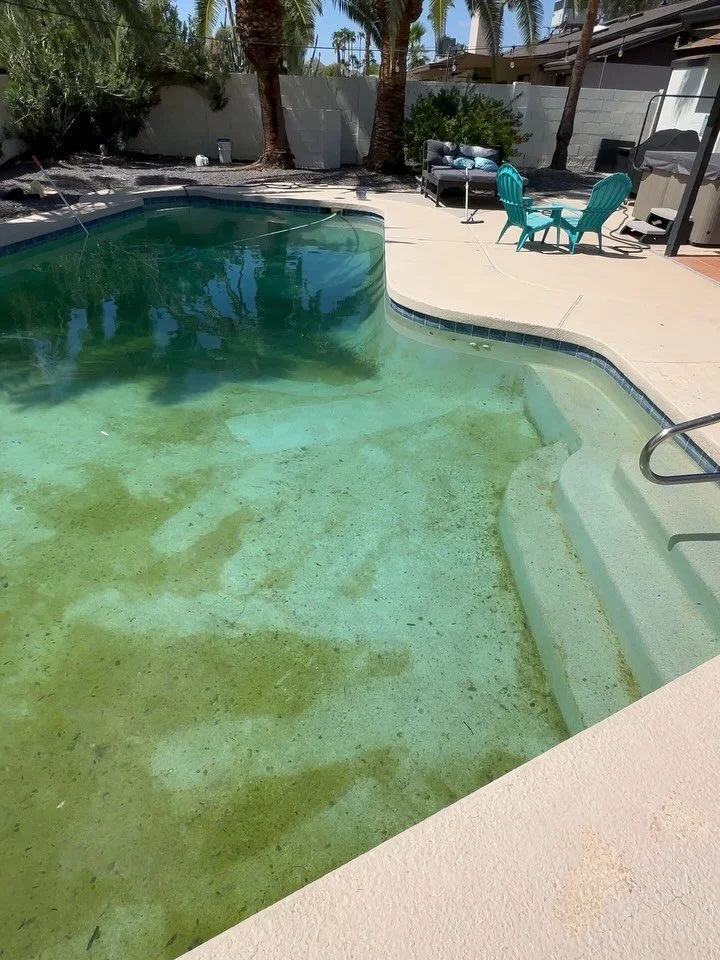
The pool has turned fully green
Established algae is visible
The floor is covered by unusually heavy debris
The pump will not start or maintain prime
The filter requires complete disassembly
External floodwater or sewage-contaminated runoff entered the pool
Electrical equipment was submerged
Plumbing or equipment was physically damaged
The pool has lost a significant amount of water
The water cannot be corrected through normal treatment
Multiple return visits will be required
When the initial condition exceeds a standard storm cleanup, we will explain the recommended service before expanding the work.
When a System Refresh Is Not Enough
A System Refresh is not intended for every neglected pool.
A different service may be required when:
The water is fully green
An established algae bloom is visible
Heavy debris covers the pool floor
The pool has been abandoned for an extended period
The filtration system is not functioning
The pump cannot circulate water
The filter requires complete disassembly
Calcium hardness or cyanuric acid requires substantial water replacement
The pool has severe scale, staining or surface deterioration
Multiple treatment visits will be necessary
If the initial evaluation shows that the pool requires a more extensive recovery, we will explain the findings before changing the scope.
Our Diagnosis-First Approach
We do not treat every storm-affected
pool with the same chemical dose.
Here’s What To Expect:
1. We Assess the Storm Impact
We evaluate the debris load, water clarity, water level and visible condition of the pool.
2. Clear the Circulation Path
Leaves and debris are removed from baskets, cleaner openings and other accessible areas that may restrict water flow.
3. Test the Water
We test the primary chemistry levels to determine whether rainfall, debris and sanitizer demand have disrupted the pool’s balance.
4. Evaluate Filtration and Circulation
We observe pump operation, return flow and filter pressure to determine whether the system can support recovery.
5. Clean the Pool
We skim, brush and vacuum according to the amount and type of debris.
6. Apply Targeted Treatment
Sanitizer and balancing chemicals are added according to the actual readings and pool condition.
7. Establish the Recovery Plan
We determine whether extended circulation, filter cleaning, additional treatment or equipment diagnostics are needed.
8. Document the Visit
You receive a digital report showing test results, work completed, chemicals added and relevant observations.
Why Storm Debris Affects More Than Appearance
Storm debris can create several problems simultaneously.
Leaves and organic material consume sanitizer as they break down. Fine dust can remain suspended in the water or quickly load the filter. Clogged baskets can reduce water entering the pump. Heavy rainfall can change the water level and alter existing chemistry.
That means simply removing the visible leaves may not restore the pool completely.
A proper cleanup should consider:
Water chemistry
Circulation
Filtration
Debris load
Sanitizer demand
Equipment operation
Whether algae has begun developing
Filter Service After a Storm
A major dust or wind event can load a pool filter much faster than ordinary weekly operation.
Routine backwashing or rinsing may be completed when appropriate for the filter type and condition.
A complete cartridge or DE filter teardown is not automatically included in standard Post-Storm Cleanup. Full disassembly requires additional labor and provides access to inspect and clean the internal components.
Complete filter cleaning may be recommended when:
Pressure remains significantly elevated
Return flow remains weak
The filter becomes dirty again quickly
Fine dust continues returning to the pool
The pool experienced a major debris event
The filter’s previous condition or service history is unknown
When backwashing is necessary, Phoenix pool water must not be discharged into streets, alleys or storm drains. Discharge must follow the applicable sanitary-sewer or approved on-property requirements.
Equipment Concerns After a Storm
Storm conditions may reveal or contribute to equipment problems, including:
Clogged pump baskets
Blocked cleaner lines
Restricted impellers
Air entering the circulation system
Pumps losing prime
Rapidly increasing filter pressure
Valves obstructed by debris
Automation or schedules affected by power loss
Visible plumbing leaks
Water intrusion around equipment
Physical damage caused by branches or loose objects
A standard cleanup includes visible operating observations—not a complete electrical, structural or internal equipment inspection.
If electrical components were submerged, appear damaged or are surrounded by standing water, do not touch or restart them. Electrical systems affected by flooding should be evaluated from a safe location by an appropriately qualified professional.
Floodwater and Runoff Contamination
Ordinary rainfall entering from above is different from outside floodwater or contaminated runoff entering from the yard, street, wash or sewer system.
Floodwater can contain microbial and chemical contamination and may require a more extensive response than standard dust-and-debris cleanup. CDC guidance recognizes that floodwater can carry bacteria, viruses and contamination from wastewater or sewer systems.
Tell us immediately if:
Street or yard runoff entered the pool
Sewage may have entered the water
The pool overflowed into a contaminated area and flowed back
Floodwater covered the equipment pad
You suspect fuel, pesticides or other chemicals entered the pool
Do not swim in the pool until the condition has been evaluated and the water is safe, clear and properly sanitized.
What to Expect After Cleanup
Many pools show major visible improvement during the initial cleanup.
Complete clarity may still require additional circulation and filtration, especially when large amounts of fine dust entered the water.
Recovery time depends on:
Debris volume
Amount of suspended dust
Filter type and condition
Water chemistry
Sanitizer demand
Pool size
Circulation performance
Whether algae or equipment problems are present
A lightly affected pool may recover rapidly. A heavily dust-loaded or chemically disrupted pool may require 24–72 hours of filtration, filter attention or an additional visit.
We will provide expectations based on the actual condition rather than promising the same result for every storm.
Pricing
Most standard residential Post-Storm Cleanup services fall between $125 and $399.
Final pricing may depend on:
Pool size
Debris volume
Type of debris
Water clarity
Vacuuming requirements
Chemical demand
Filter condition
Required labor
Equipment problems
Accessibility
Whether additional visits are needed
The following may be quoted separately:
Extremely heavy debris removal
Back-to-Blue algae recovery
Full cartridge or DE filter teardown
Equipment diagnostics and repair
Floodwater-contamination response
Water replacement
Multiple recovery visits
Removal of large branches or hazardous material
Any material change in scope will be discussed before additional work proceeds.
Frequently Asked Questions
Q: How soon should I schedule service after a monsoon?
As soon as practical after the immediate storm hazard has passed.
Prompt debris removal can help restore circulation and prevent leaves, dust and organic material from remaining in the water longer than necessary.
Q: Will rain ruin my pool chemistry?
Rainfall alone does not automatically ruin the water, but heavy rain combined with dust, debris and organic material can alter the water level, increase sanitizer demand and contribute to cloudy or unstable conditions.
Testing determines what actually needs correction.
Q: Does every storm require professional cleanup?
No.
A minor storm may require only ordinary skimming and basket cleaning. Professional cleanup becomes more useful when debris is heavy, water clarity changes, circulation is restricted or the homeowner cannot safely restore the pool alone.
Q: Do you automatically shock the pool?
No.
Sanitizer treatment is based on the water readings, debris load and visible condition. We do not add a predetermined shock dose to every storm-affected pool.
Q: Is full filter cleaning included?
Not automatically.
Routine backwashing or rinsing may be included when appropriate. Complete cartridge or DE filter disassembly is a separate service unless specifically included in the proposal.
Q: My pool is cloudy after a dust storm. Is that normal?
Fine dust can remain suspended and may take time for the filter to capture. Cloudiness can also involve sanitizer, chemistry, circulation or filter problems, so we evaluate the complete condition rather than assuming dust is the only cause.
Q: What should I do before you arrive?
When it is safe:
Keep people and pets away from damaged equipment
Do not touch submerged electrical components
Remove loose furniture or objects from the immediate work area
Leave large submerged debris in place if removing it could damage the surface
Send photos of the pool and equipment pad
Tell us whether the pump is currently operating
Tell us whether outside floodwater entered the pool
Q: Should I lower the water level before a forecast storm?
Not as a universal practice.
Most pools are designed to manage ordinary rainfall through their existing water level and drainage arrangements. Do not discharge pool water into the street or storm drain. If the pool is already unusually high or has a known overflow problem, contact a pool professional for property-specific guidance. Phoenix requires pool-water discharge to follow approved sanitary-sewer or on-property methods.
Q: How can I prepare before future storms?
Before hazardous weather arrives, you can:
Secure loose furniture, umbrellas and decorations
Empty skimmer and pump baskets
Confirm that normal yard drainage paths are clear
Verify that the pool is properly sanitized
Remove lightweight items that could blow into the water
Avoid handling outdoor electrical equipment during lightning or flooding
Wait until the storm has passed before beginning cleanup
Get Your Pool Back
Under Control
After the Storm
Use the form below to send us send us:
Wide photos of the pool
Photos of the floor and visible debris
Photos of the equipment pad
A description of whether the pump is running
Whether outside runoff entered the pool
Your property location
We will determine whether the pool needs standard Post-Storm Cleanup, a System Refresh, Back-to-Blue recovery, filter cleaning or equipment diagnostics.